



Wisdom teeth are among the most talked-about teeth in dentistry — and among the most misunderstood. Some people never feel them at all, while others find that a single wisdom tooth causes years of pain, swelling and crowding.
The question that brings most patients to the clinic is a simple one: does this tooth have to come out?
The answer is not always yes. Extraction is not an automatic decision; it is the conclusion of a clinical and radiological assessment. In this article, Frig Dent Dental Clinic in Eskişehir explains what wisdom teeth are, when extraction is genuinely necessary, how the procedure works and what to expect during healing.
What Are Wisdom Teeth?
Wisdom teeth are the third molars, the last teeth at the back of each quadrant of the jaw. They usually erupt between the ages of 17 and 25 – which is where the Turkish name “yirmi yaş dişi”, the twenty-year-old tooth, comes from.
Not everyone has four. Some people have three, some have one, and some are born without any at all. This is entirely normal.
The problem is usually not the tooth itself but the space available for it. The human jaw has become smaller over time, while the wisdom teeth have remained. When there is not enough room, the tooth cannot erupt into a normal position.
What Does an Impacted Wisdom Tooth Mean?
A wisdom tooth that cannot fully emerge through the gum or the bone is described as impacted. Impaction can take several forms:
- Fully impacted – the tooth remains completely inside the bone
- Partially erupted – part of the crown is visible, the rest is covered by gum
- Angular impaction – the tooth is tilted towards the neighbouring molar
- Horizontal impaction – the tooth is lying on its side inside the bone
Partially erupted wisdom teeth often cause the most trouble, because the gum flap over them traps food and bacteria in a space that cannot be cleaned properly.
Symptoms That Suggest a Wisdom Tooth Problem
- Pain or pressure at the back of the jaw
- Swelling and redness of the gum behind the last molar
- Difficulty opening the mouth fully
- Bad breath or a bad taste
- Pain radiating towards the ear or jawline
- Decay in the wisdom tooth or in the molar next to it
- Recurring episodes that settle and then return
Pain that comes and goes is not a sign that the problem has resolved. It usually means the inflammation is flaring and calming in cycles.
When Is Extraction Necessary?
Extraction is generally recommended in the following situations:
- Repeated infection of the gum around the tooth (pericoronitis)
- Decay in the wisdom tooth that cannot be restored
- Decay or bone loss developing on the back surface of the neighbouring molar
- A cyst or lesion forming around an impacted tooth
- The tooth damaging the root of the adjacent molar
- Persistent pain or functional problems
- An unopposed tooth that over-erupts and traumatises the opposite gum
- Cases where extraction is required as part of orthodontic planning
When Is It Not Necessary?
A wisdom tooth does not have to be removed simply because it exists. Extraction may not be needed when:
- The tooth has erupted fully and in a correct position
- It has a functional opposing tooth to bite against
- It can be cleaned properly
- It is causing no symptoms and no damage to the neighbouring tooth
- It is deeply impacted, entirely asymptomatic and carries a higher surgical risk than benefit
In such cases, monitoring with periodic examination and radiographs is often the more sensible approach. At Frig Dent we recommend extraction when there is a clinical reason for it — not as a routine.
Do Wisdom Teeth Cause Crowding of the Front Teeth?
This is one of the most common beliefs, and the honest answer is that it is debated.
Crowding of the lower front teeth in adulthood has several causes, including natural changes in the jaw over time. A wisdom tooth pushing forwards may contribute in some people, but it is not the sole explanation.
If you have had orthodontic treatment, your orthodontist will assess whether the wisdom teeth pose a risk to your result — and a retainer remains the most reliable protection against relapse.
How Is the Extraction Carried Out?
1. Examination and imaging
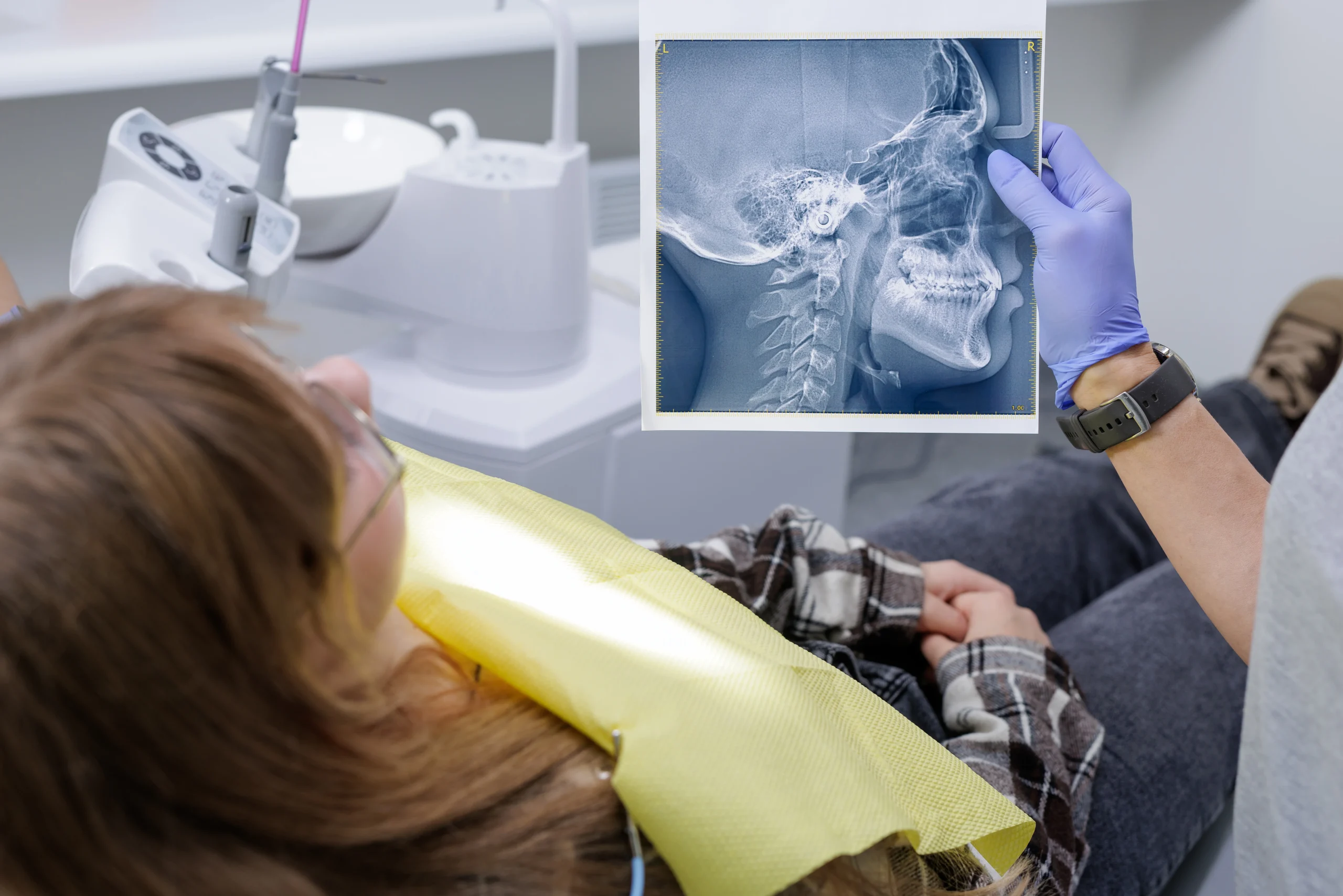
A panoramic X-ray shows the position of the tooth and its roots. Where the roots lie close to the nerve canal in the lower jaw, or close to the sinus in the upper jaw, 3D dental tomography (CBCT) may be requested for a more detailed assessment. This is a planning step that directly affects safety.
2. Local anaesthesia
The area is fully numbed. You will feel pressure and movement during the procedure, but not pain.
3. Simple or surgical extraction
A tooth that has erupted normally can often be removed in a straightforward way. An impacted tooth requires a surgical approach: the gum is lifted, a small amount of bone may be removed, and the tooth is sometimes divided into sections so it can be taken out through a smaller opening. Dividing the tooth is not a complication – it is a technique that reduces trauma.
4. Cleaning and suturing
The socket is cleaned and the gum is closed with stitches where needed. Many sutures used today dissolve on their own.
Most extractions take between 15 and 45 minutes depending on the position of the tooth.
Aftercare: The First 24 Hours Matter Most
A blood clot forms in the socket after extraction, and that clot is what protects the healing site. Most complications come from losing it.
In the first 24 hours:
- Bite gently on the gauze for the first 30–60 minutes
- Apply a cold compress from outside, in intervals
- Do not rinse, spit forcefully or use mouthwash
- Do not drink through a straw
- Do not smoke
- Avoid hot food and drink
- Take the medication prescribed for you
In the following days:
- Prefer soft, lukewarm foods
- Chew on the opposite side
- Brush your other teeth as normal, avoiding the wound
- Rinse gently with warm salt water from the second day, if your dentist recommends it
- Avoid strenuous exercise for a few days
- Attend your follow-up appointment
Swelling usually peaks around the second or third day and then subsides. This is a normal part of healing, not a sign of failure.
What Is Dry Socket?
Dry socket occurs when the blood clot is lost or breaks down before the site has healed, leaving the bone exposed.
It typically appears 2–4 days after extraction as a throbbing pain that is stronger than the pain of the first day and may radiate to the ear, often with a bad taste or odour. Smoking, using a straw and forceful rinsing are the main risk factors.
It is treatable. If your pain increases rather than decreases after the third day, contact your dentist rather than waiting.
Frequently Asked Questions (FAQ):
Is wisdom tooth extraction painful?
No pain is felt during the procedure thanks to local anaesthesia. Afterwards there may be discomfort for a few days, which is controlled with prescribed painkillers.
How long does healing take?
The gum surface generally closes within 1–2 weeks. Bone healing beneath continues for several months. Most people return to daily activities within 2–3 days.
Can all four be removed at once?
In some cases yes, but it depends on the difficulty of the teeth and your general health. Removing one side at a time allows you to chew comfortably on the other, which many patients prefer.
Is there an age limit?
Extraction is often technically easier at a younger age, when the roots are less developed and the bone is more elastic. That said, extraction is possible at any age when there is a clinical need.
What are the risks?
As with any surgical procedure there are risks, including infection, prolonged bleeding, temporary numbness of the lip or tongue in lower extractions, and communication with the sinus in upper extractions. These are uncommon and are minimised by correct imaging, planning and technique.
Wisdom Tooth Extraction in Eskişehir | Frig Dent
Wisdom teeth are neither always a problem nor always harmless. What matters is a correct assessment: the position of the tooth, its relationship to the nerve and the sinus, the condition of the neighbouring molar and whether the area can realistically be kept clean.
At Frig Dent Dental Clinic in Eskişehir, we assess wisdom teeth with digital imaging, explain clearly whether extraction is genuinely needed, and carry out the procedure with patient comfort as a priority.
If you have pain, swelling or recurring problems around a wisdom tooth — or simply want to know whether yours need to come out — contact Frig Dent Dental Clinic for a detailed examination and a personalised plan.