


What Is Digital Smile Design (DSD)? Can Your Smile Be Designed to Suit Your Face?
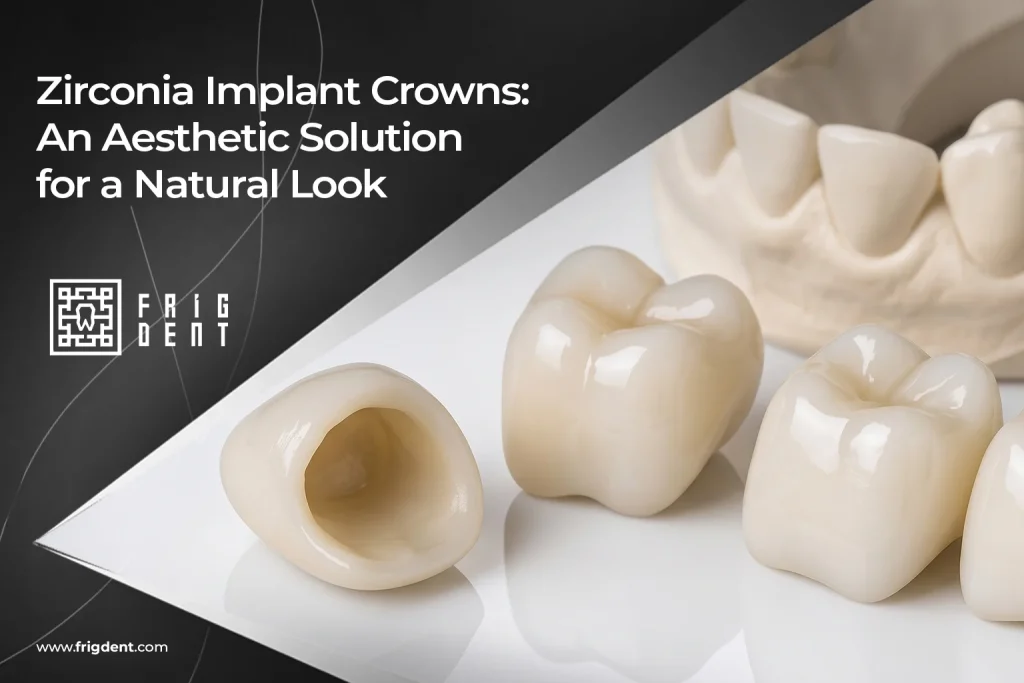
When a dental implant is placed to replace a missing tooth, the implant itself — the titanium post fixed into the jawbone — is only half of the story. The crown that sits on top of it is what patients actually see, and its material has a significant effect on how natural the final result looks. Zirconia has become one of the most widely used materials for implant crowns, valued for combining strength with a lifelike appearance.
What Is Zirconia?
Zirconia, or zirconium dioxide, is a high-strength ceramic material with a long history of use in medicine before it became common in dentistry. It is prized for its flexural strength and fracture toughness, meaning it can withstand the everyday forces of chewing without the risk of chipping that some other ceramics carry. It is also highly biocompatible, so the body accepts it well and it does not trigger the kind of sensitivity issues that some metal-based restorations can cause.
Why Choose Zirconia Over a Metal-Based Crown?
Traditionally, many implant and tooth crowns were made as porcelainfused-to-metal (PFM) restorations, with a metal framework beneath a layer of porcelain. While durable, this metal core can affect how light passes through the crown, sometimes giving it a slightly opaque or artificial look compared to a natural tooth. It can also become visible as a thin grey line near the gumline if the gum tissue recedes over time. Zirconia crowns are metal-free. Because there is no underlying metal structure, light can pass through the material in a way that more closely resembles natural enamel, and there is no risk of a grey line appearing at the gum margin. For patients with a known sensitivity to metal alloys, zirconia also removes that concern entirely.
Balancing Strength and Aesthetics
Not all zirconia is the same. Earlier formulations were prized mainly for their strength but tended to look more opaque than natural teeth, particularly in the front of the mouth where translucency matters most. Newer, high-translucency zirconia formulations have been developed specifically to address this, offering a closer match to natural tooth structure while retaining most of the material’s strength. Your dentist will select the formulation — and its shade — based on where in the mouth the crown will sit and how visible it will be when you smile or speak.
Where Are Zirconia Implant Crowns Used?
Zirconia crowns can be used on implants throughout the mouth, but they are especially valued at the front, where appearance matters most, and for patients who want a completely metal-free restoration. They can be fixed onto the implant either with cement or by being screwed directly into the implant, depending on the clinical situation and the dentist’s assessment.
What to Expect at Frig Dent Dental Clinic
If you are planning an implant, or already have one and are considering the crown that will complete it, our dental team can talk you through the material options available, including zirconia, and help you choose the one best suited to the tooth’s position, your bite, and your aesthetic goals. As with any implant treatment, a full individual assessment is the starting point for a plan tailored to you.