


Say Goodbye to the Metallic Look | Why Are Ceramic Implants on the Rise for a Natural and Aesthetic Smile?
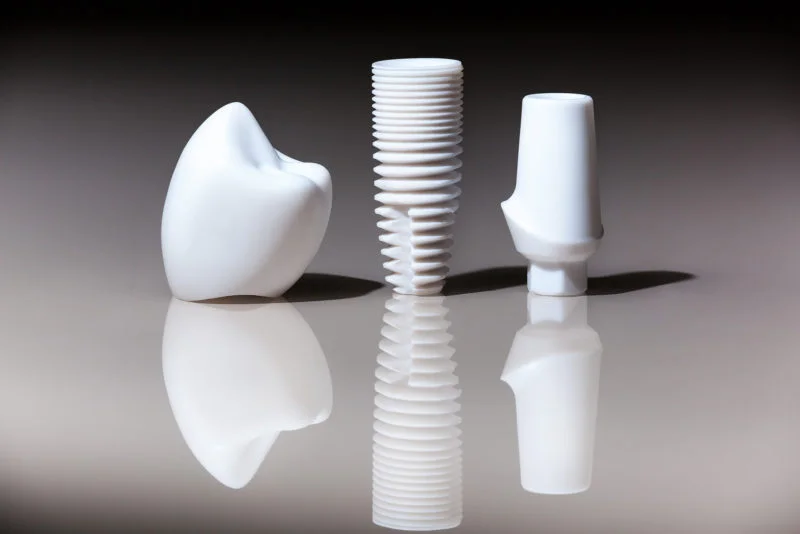
Tooth loss is a significant problem that directly affects both aesthetic appearance and oral health. Today, dental implant applications are among the most modern and permanent solutions in the treatment of missing teeth. In recent years, ceramic implant systems, developed as an alternative to classic titanium implants, have been drawing attention. Ceramic implants particularly stand out for patients seeking a natural appearance, biocompatible materials, and metal-free treatment.
As Frig Dent Eskişehir Dental Clinic, the only dental clinic applying ceramic implants in Eskişehir, we address frequently asked questions in detail in this article, such as: what is a ceramic implant, what is the history of ceramic implants, what are their advantages, and why should they be preferred?
What is a Ceramic Implant?
A ceramic implant is an implant system generally produced from high-durability zirconium dioxide material. Zirconium is a strong and aesthetic material widely used in modern dentistry, both in prosthetics and in the field of implantology.
Unlike titanium implants, ceramic implants are white in color. Thanks to this, they provide a more natural appearance, especially in the front tooth region. Even if gum recession occurs, no grey metallic reflection is formed.
For this reason, ceramic implants are frequently preferred by patients with high aesthetic expectations, those who want a natural look, and those seeking metal-free treatment.
History of Ceramic Implants
The use of ceramic materials in the medical field dates back quite a long time. In the scientific publication titled History of Ceramic Orthopedic Implants, published in 1972, it is stated that ceramics have been used in bone repair and orthopedic applications for many years. According to the study, the foundations of ceramic-based biomaterials extend back to the late 19th century.
Starting from the 1960s, intensive research was conducted on biocompatible ceramic materials, and structures capable of integrating with bone were developed. These developments were later reflected in dentistry as well.
The rise of ceramic implants in dental implantology gained momentum in the 2000s. In particular, zirconium implant systems developed by Swiss-based manufacturers opened a new era in this field.
In 2004, the first ceramic implant systems received CE certification and began to spread across the European and American markets in subsequent years. Today, thanks to digital impression systems, CAD/CAM technologies, and advanced surface designs, ceramic implants deliver much more successful results.
Why Should Ceramic Implants Be Preferred?
1. Natural and Aesthetic Appearance
One of the biggest advantages of ceramic implants is that they are in white tones close to natural tooth color. In titanium implants, although rarely, a grey metallic reflection may be seen in cases of gum recession. In ceramic implants, this risk is much lower. This provides an important advantage, especially for patients who want an aesthetic appearance in the front tooth area.
2. Metal-Free Treatment Option
Some patients may not want metallic materials in their bodies or may prefer a metal-free lifestyle. Ceramic implants represent an important alternative at this point. Ceramic implants can be preferred for individuals with metal sensitivity or those who attach importance to biological compatibility.
3. Biocompatible Structure
Zirconium ceramics are among the materials that can demonstrate high compatibility with oral tissues. Thanks to their structure aligned with the gums, they can create a healthy and natural appearance. This situation provides an advantage, especially in patients who desire gum aesthetics.
4. Durability
Zirconium implants developed with modern production technologies are quite strong. They are resistant to daily chewing forces. With correct planning, proper surgical application, and good oral care, ceramic implants can be used for many years.
5. Potential Reduction in Plaque Accumulation
Some research indicates that zirconium surfaces may provide an advantage against bacterial attachment. This situation can be positive for gum health. However, regular care is important for every type of implant.
Who Are Ceramic Implants Suitable For?
Ceramic implant treatment may be suitable for the following individuals:
Patients with a single missing tooth
Individuals experiencing multiple missing teeth
Patients with high aesthetic expectations in the front region
Those who want a metal-free implant
Individuals who attach importance to gum appearance
Patients seeking a healthy and long-lasting solution
However, the most accurate implant type for each patient should be determined after a clinical examination and radiological evaluation.
Ceramic Implants or Titanium Implants?
This question is frequently asked by patients. Both implant types have their own advantages.
Titanium implants: Have been used for many years and possess an extensive clinical history.
Ceramic implants: Are preferred because they are more aesthetic, metal-free, and advantageous in terms of biological compatibility. Which implant is more appropriate depends on bone structure, aesthetic expectations, general health status, and the physician’s evaluation.
How Does the Ceramic Implant Treatment Process Proceed?
Ceramic implant treatment generally consists of the following stages:
Clinical examination
Panoramic X-ray or 3D tomography
Treatment planning
Implant placement procedure
Healing process
Application of the upper prosthesis or crown
In some suitable cases, same-day temporary tooth applications may also be possible.
What Should Be Considered After Ceramic Implants?
Post-treatment care is important for successful results:
Regular tooth brushing
Use of dental floss and interdental brushes
Reducing or quitting smoking
Going to check-up appointments regularly
Avoiding biting hard objects
Complying with the dentist’s recommendations
With proper care, the lifespan of implants can increase significantly.
Ceramic Implant Treatment in Eskişehir
For patients seeking aesthetic and modern dental treatments in Eskişehir, ceramic implants applications are increasingly preferred. It is an effective option, especially for individuals who want a natural look, do not wish to use metal, and are looking for a long-lasting solution.
As Frig Dent Eskişehir Dental Clinic, we prioritize current technologies, personalized planning, and an aesthetic approach in implant treatments. Ceramic implants are a modern, aesthetic, and biocompatible treatment option for missing teeth. Ceramic biomaterials, whose history dates back many years, have become much more successful today thanks to advanced technology. Thanks to advantages such as a natural appearance, metal-free structure, strong durability, and gum compatibility, ceramic implants are frequently preferred today.
If you are also looking for a permanent and aesthetic solution for missing teeth, you can review our relevant page (https://frigdent.com/implant-tedavisi/) to get detailed information about implant treatment at Frig Dent Eskişehir Dental Clinic, contact us for an appointment, and create a personalized treatment plan.